
The incidents have also reignited scrutiny of how states issue commercial driver’s licenses (CDLs) to drivers without lawful immigration status.

In a letter to WSDOT, Dunn urged the development of a so-called “Stupid Motorist Law,” inspired by other states’ statutes aimed at holding drivers of oversized loads financially accountable, alongside other countermeasures to hold negligent drivers accountable.
The appeal follows the third strike in two months, including the recent damage to the westbound lanes of Interstate 90 (I-90). Dunn pointed to a troubling pattern of oversized-vehicle collisions, including incidents on SR 167 near the City of Pacific and the Bullfrog Road overpass on I-90. He urged a comprehensive review of the incidents and reaffirmed support for Bob Ferguson’s infrastructure proposals.
“I believe this problem is getting worse, not better,” Dunn wrote, citing the heavy costs of these incidents: repairs, lost time, public-safety risk, freight-movement disruption, and economic harms.
Dunn also advocated for steeper fines and penalties for drivers who violate over-height permits or fail to follow routing instructions. He pledged to support related funding efforts in Olympia during the upcoming state budget negotiations.
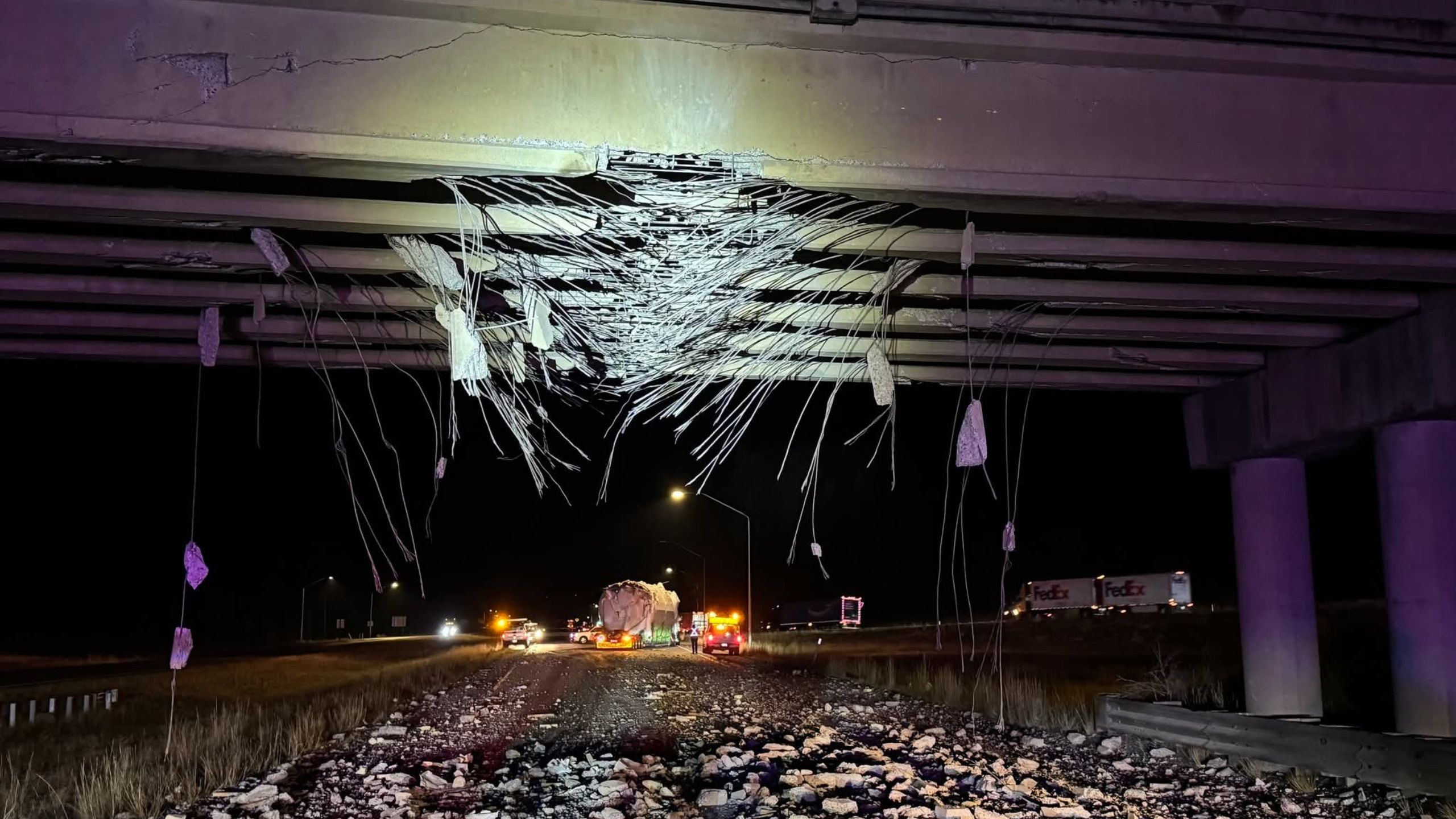
The latest strike involved a semi-truck carrying an oversized load that slammed into the Bullfrog Road overpass on I-90. In a statement to The Ari Hoffman Show on Talk Radio 570 KVI, the driver was identified as Allan Bergsma (64) of Wingham, Ontario, who was cited for violation of a special oversize-load permit. After the collision, WSDOT crews under an emergency contract worked nonstop for more than 22 hours to remove the damaged bridge section and reopen the westbound lanes Friday evening.
WSDOT South Central Region administrator Brian White said that crews were still clearing debris and inspecting the remaining structure for safety. Traffic delays of 30 minutes to an hour were reported as drivers detoured via Exit 80 and Exit 85 due to lane closures and restricted access from Bullfrog Road. WSDOT’s South Central communications manager, Meagan Lott, cautioned that weather, including potential snow in higher elevations, could further impede the repair effort.
Governor Bob Ferguson declared a state of emergency for the incident, allowing access to federal funds for repairs and enabling the state to seek reimbursement from the trucking company involved.
The incidents have also reignited scrutiny of how states issue commercial driver’s licenses (CDLs) to drivers without lawful immigration status. Recent investigations revealed that in one high-profile case, an illegal alien truck driver issued a CDL by both Washington and California was later involved in a deadly crash in Florida.
According to the Federal Motor Carrier Safety Administration (FMCSA) investigation, the driver answered only 2 of 12 questions correctly on an English-language proficiency assessment, and just 1 of 4 highway signs correctly. Additionally, the driver had failed written CDL-knowledge testing in Washington 10 times over two months in 2023.
Federal authorities say regulations prohibit states from issuing CDLs to individuals who are not in the United States legally. Washington and other states are currently under federal warning that they risk losing highway safety funds unless they enforce English-language proficiency and immigration-status compliance for CDL applicants.
The Florida Attorney General’s Office has sued Washington and California, arguing that issuing CDLs to undocumented immigrants violates federal safety and immigration laws.
In his letter to WSDOT, Dunn referenced these regulatory gaps, saying stronger accountability for drivers, including proof of legal entitlement, language proficiency tests, and permit-compliance history, should be part of the state’s broader strategy to prevent infrastructure damage.
The convergence of repetitive bridge strikes and broader concerns about driver licensing underlines a risk to public safety, infrastructure resilience, and taxpayer costs. Each major strike brings multi-million-dollar repair bills, freight interruptions along key arteries, and associated economic damage, in addition to heightened risk for motorists and first responders.
WSDOT is expected to initiate a review of bridge-strike cause data, oversize permit processing, and coordination with enforcement agencies. Additionally, the Legislature may consider statutory changes tied to licensing eligibility, such as explicit immigration-status verification for CDLs and mandatory English-language testing for commercial operators.
Lawmakers have suggested that budget allocations in Olympia could include dedicated funding for “smart bridge” detection systems (overheight sensors, warning signage) and emergency-repair contingency funds.
Washington state is also facing pressure to align with federal standards to avoid forfeiting highway-safety funds tied to compliance with language and licensing regulations.
Powered by The Post Millennial CMS™ Comments
Join and support independent free thinkers!
We’re independent and can’t be cancelled. The establishment media is increasingly dedicated to divisive cancel culture, corporate wokeism, and political correctness, all while covering up corruption from the corridors of power. The need for fact-based journalism and thoughtful analysis has never been greater. When you support The Post Millennial, you support freedom of the press at a time when it's under direct attack. Join the ranks of independent, free thinkers by supporting us today for as little as $1.
Remind me next month
To find out what personal data we collect and how we use it, please visit our Privacy Policy

Comments