
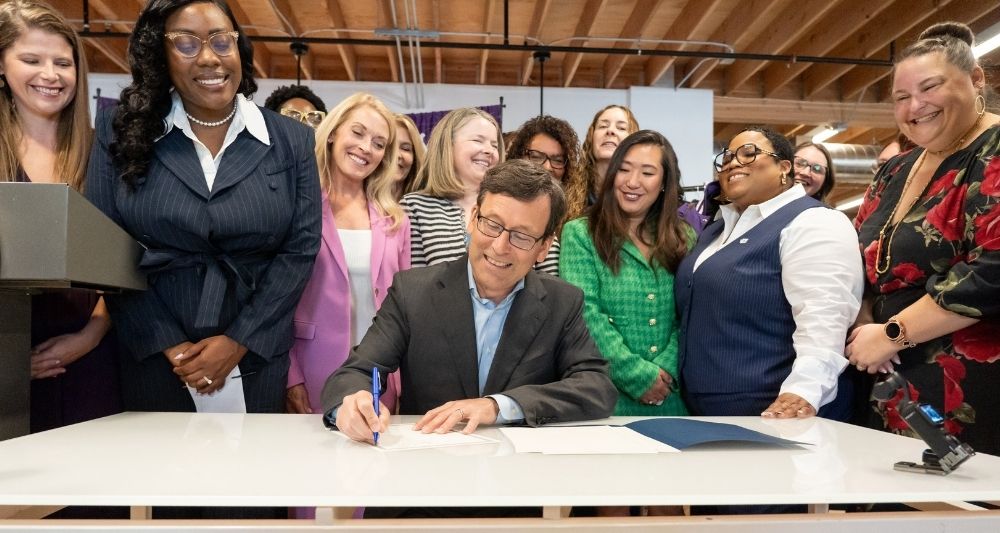
"Menopause has been invisible in workplace policy for too long."

Executive Order 26-01 directs the Washington State Women’s Commission to work with cabinet agencies to review and strengthen existing policies for menopause-related accommodations. The order calls for measures such as telework options, flexible dress codes, access to cold water, and temperature control.
The move comes after Democratic lawmakers at the federal level pushed for mandatory extra sick days for women experiencing menstrual pain, with Rep. Yassamin Ansari proposing up to 12 days of paid leave per year for “reproductive health,” including period pain, menopause symptoms, IVF, and related issues. Rep. Adelita Grijalva argued at the time that forcing women to choose between work and recovery amounted to “economic violence.”
Announcing the order on X, Ferguson said the policy would ensure cabinet agencies have "appropriate measures in place to support state employees experiencing menopause symptoms" and said his administration would share the guidance with employers across Washington. "We believe this is one of the most comprehensive single pieces of policy put forward to date combining worker protections with increasing health profession education on perimenopause and menopause," Ferguson wrote.
Ferguson framed the order as both a workforce retention measure and an effort to expand awareness of menopause-related health issues. “We are losing women in the workforce with tremendous knowledge and experience because we are not doing enough to prepare for a natural stage of life,” Ferguson said. “As governor, my Administration will be a place where the best, most experienced workers can come serve the people of Washington, and know that they will be supported.”
According to the governor’s office, 38 percent of working women in Washington are between the ages of 40 and 59 and may be experiencing symptoms such as insomnia, brain fog, and hot flashes. The order also directs the Women’s Commission to work with the Department of Health, the Health Care Authority, and the Bree Collaborative to draft guidance and training materials for state agencies, as well as other public and private employers. Agencies will also be required to train managers and employees on workplace rights and responsibilities related to menopause accommodations.
“Menopause has been invisible in workplace policy for too long,” said Washington State Women’s Commission Executive Director Brittany Gregory. “These are not burdensome changes; they are smart workforce policy that ensure experienced workers can stay, grow and lead.”
Ferguson’s office cited Mayo Clinic estimates that menopause-related productivity losses total roughly $1.8 billion nationwide, and data from the Society for Women’s Health Research showing that two in five women considered leaving or did leave a job due to menopause symptoms. The administration also claimed that one in four women considered not pursuing or declined a leadership opportunity because of menopause-related symptoms.
Powered by The Post Millennial CMS™ Comments
Join and support independent free thinkers!
We’re independent and can’t be cancelled. The establishment media is increasingly dedicated to divisive cancel culture, corporate wokeism, and political correctness, all while covering up corruption from the corridors of power. The need for fact-based journalism and thoughtful analysis has never been greater. When you support The Post Millennial, you support freedom of the press at a time when it's under direct attack. Join the ranks of independent, free thinkers by supporting us today for as little as $1.
Remind me next month
To find out what personal data we collect and how we use it, please visit our Privacy Policy






Comments