
Federal officials have pushed for a more complete domestic battery supply chain.

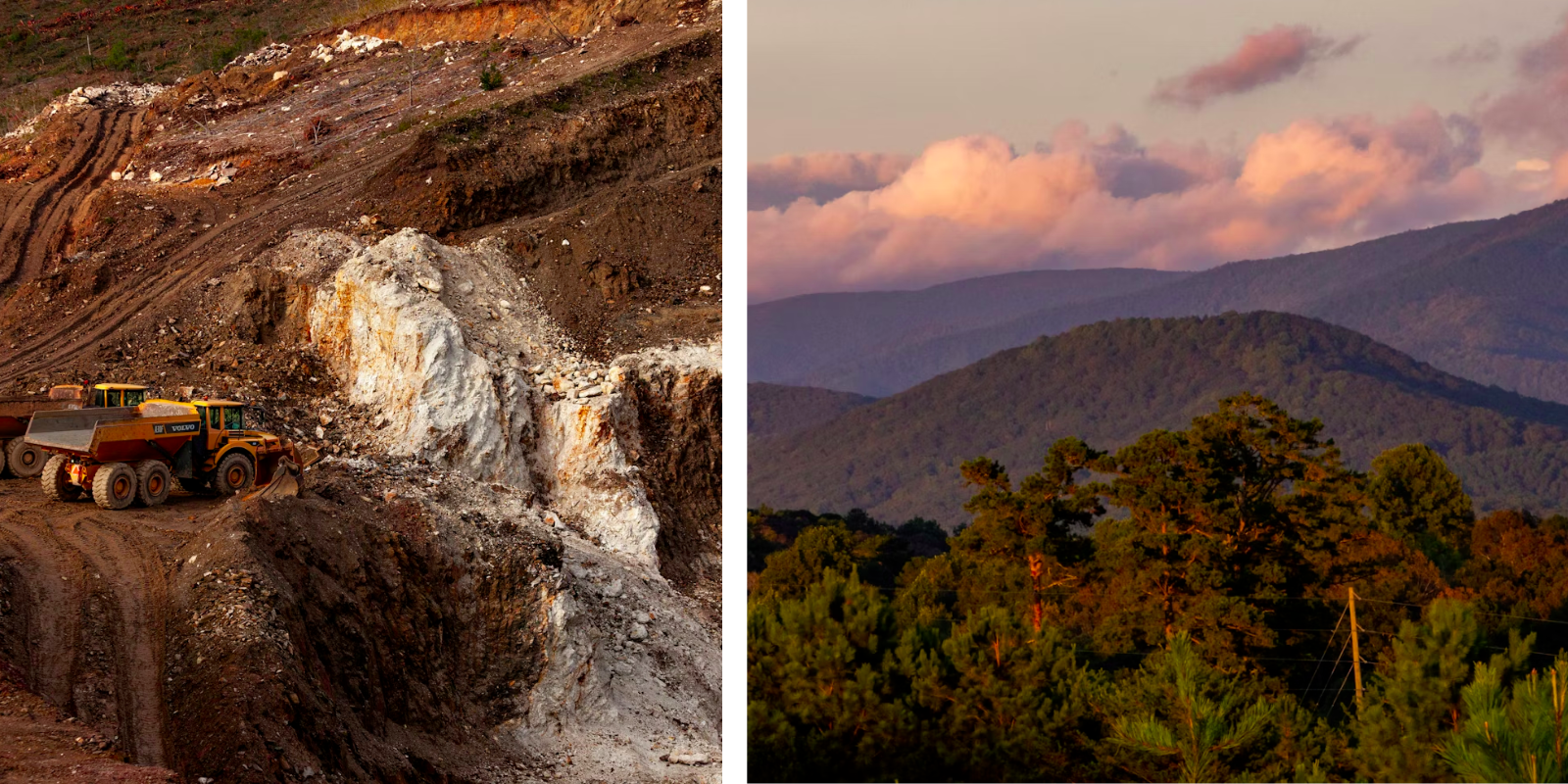
The agency said it identified an estimated 2.3 million metric tons of economically recoverable lithium oxide on the East Coast, most of that being located in parts of the Appalachian Mountains in North Carolina and South Carolina. Officials say the amount discovered could replace US imports, at last year's level, for over 300 years.
The discovery comes as the US continues to seek more domestic sources of critical minerals used in electric vehicle batteries, grid storage, and other energy technologies. Lithium was listed as a critical mineral in the US government’s 2024 updated minerals list due to its strategic role in economic growth and national security.
Bloomberg reports that the US currently imports "more than half its consumption of lithium." The newly identified reserves could reduce reliance on foreign suppliers, including countries such as China and Chile.
The Carolinas are home to the Tin-Spodumene Belt, an area rich in lithium-rich spodumene pegmatites. Researchers said the Tin-Spodumene Belt has a long history of production and was once considered the world’s leading lithium source during the mid-20th century.
Historical records from the United States Department of Energy show the Carolinas region played a major role in global lithium output decades ago. More recent studies have examined the possibility of reopening or expanding mining operations there.
Demand for lithium is expected to rise sharply in the coming decades. The International Energy Agency has projected that global lithium demand could increase 40-fold by 2040 as governments and manufacturers continue expanding battery production.
Federal officials have also pushed for a more complete domestic battery supply chain. The Federal Consortium for Advanced Batteries has emphasized the need for US-based mining, refining, and recycling operations.
The discovery also aligns with domestic sourcing requirements tied to clean energy incentives under the Inflation Reduction Act. Rules from the Internal Revenue Service and the United States Department of the Treasury require certain minerals used in qualifying electric vehicles to come from approved domestic or allied sources.
Powered by The Post Millennial CMS™ Comments
Join and support independent free thinkers!
We’re independent and can’t be cancelled. The establishment media is increasingly dedicated to divisive cancel culture, corporate wokeism, and political correctness, all while covering up corruption from the corridors of power. The need for fact-based journalism and thoughtful analysis has never been greater. When you support The Post Millennial, you support freedom of the press at a time when it's under direct attack. Join the ranks of independent, free thinkers by supporting us today for as little as $1.
Remind me next month
To find out what personal data we collect and how we use it, please visit our Privacy Policy







Comments