
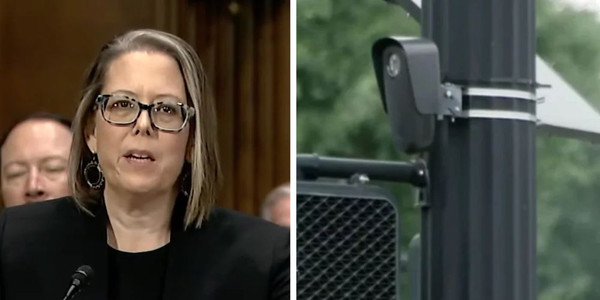
"...it becomes constitutionally problematic when law enforcement can indiscriminately and passively catalog your whereabouts over an extended period of time and then use that information for any purpose whenever convenient."

A federal judge in Oklahoma dismissed a drug case over concerns that warrantless searches of Flock camera data may violate the Fourth Amendment. The judge raised questions about law enforcement’s use of automated license plate reader databases to track individuals without probable cause.
The case centered on a traffic stop conducted by a Tulsa County sheriff’s deputy that resulted in a drug arrest. The deputy reportedly followed a driver after noticing her out-of-state license plate and searched an AI-powered camera database before identifying any traffic violation or evidence of criminal activity.
The officer, who had access to Flock and VehicleManager systems, searched the databases and found over 50 sightings of the woman’s vehicle across multiple states. The officer then noticed a traffic infraction and pulled the woman over.
US District Judge Sara E. Hill, a Biden appointee, ruled that the warrantless use of the surveillance data raises constitutional concerns.
“Freedom from persistent, dragnet-style surveillance while in public is not a foreign concept in our society, and it is a reasonable expectation that society already accepts,” Hill wrote in her ruling. “But it becomes constitutionally problematic when law enforcement can indiscriminately and passively catalog your whereabouts over an extended period of time and then use that information for any purpose whenever convenient.”
The ruling does not establish that Flock camera data used to assist in an arrest is illegal. The judge addressed the specific circumstances of the case and determined that the officer did not have probable cause to intrude on the woman’s “reasonable expectation of privacy.”
“The ruling goes against the overwhelming weight of authority in similar cases across the country, including multiple recent decisions in Oklahoma, and we expect it will be appealed and ultimately overturned,” a spokesperson for Flock told The Hill in a statement. “This ruling is limited to the specific facts of this case. It does not set controlling precedent and does not affect law enforcement agencies’ continued use of these important public safety technologies.”
Flock’s automated license plate reader cameras have become the subject of growing debate over surveillance and privacy. Republican Missouri Senator Josh Hawley has been among the most outspoken critics of the technology in Congress, highlighting the camera’s capabilities during a Senate Judiciary Subcommittee hearing on September 23.
Hawley raised concerns about the lack of accountability surrounding searches that were conducted without probable cause, noting that until last year, Flock customers could enter the justification for a search into a free-text field without any meaningful oversight. Officers have reportedly entered vague explanations, including “search” and “lol.”
Powered by The Post Millennial CMS™ Comments
Join and support independent free thinkers!
We’re independent and can’t be cancelled. The establishment media is increasingly dedicated to divisive cancel culture, corporate wokeism, and political correctness, all while covering up corruption from the corridors of power. The need for fact-based journalism and thoughtful analysis has never been greater. When you support The Post Millennial, you support freedom of the press at a time when it's under direct attack. Join the ranks of independent, free thinkers by supporting us today for as little as $1.
Remind me next month
To find out what personal data we collect and how we use it, please visit our Privacy Policy





Comments