
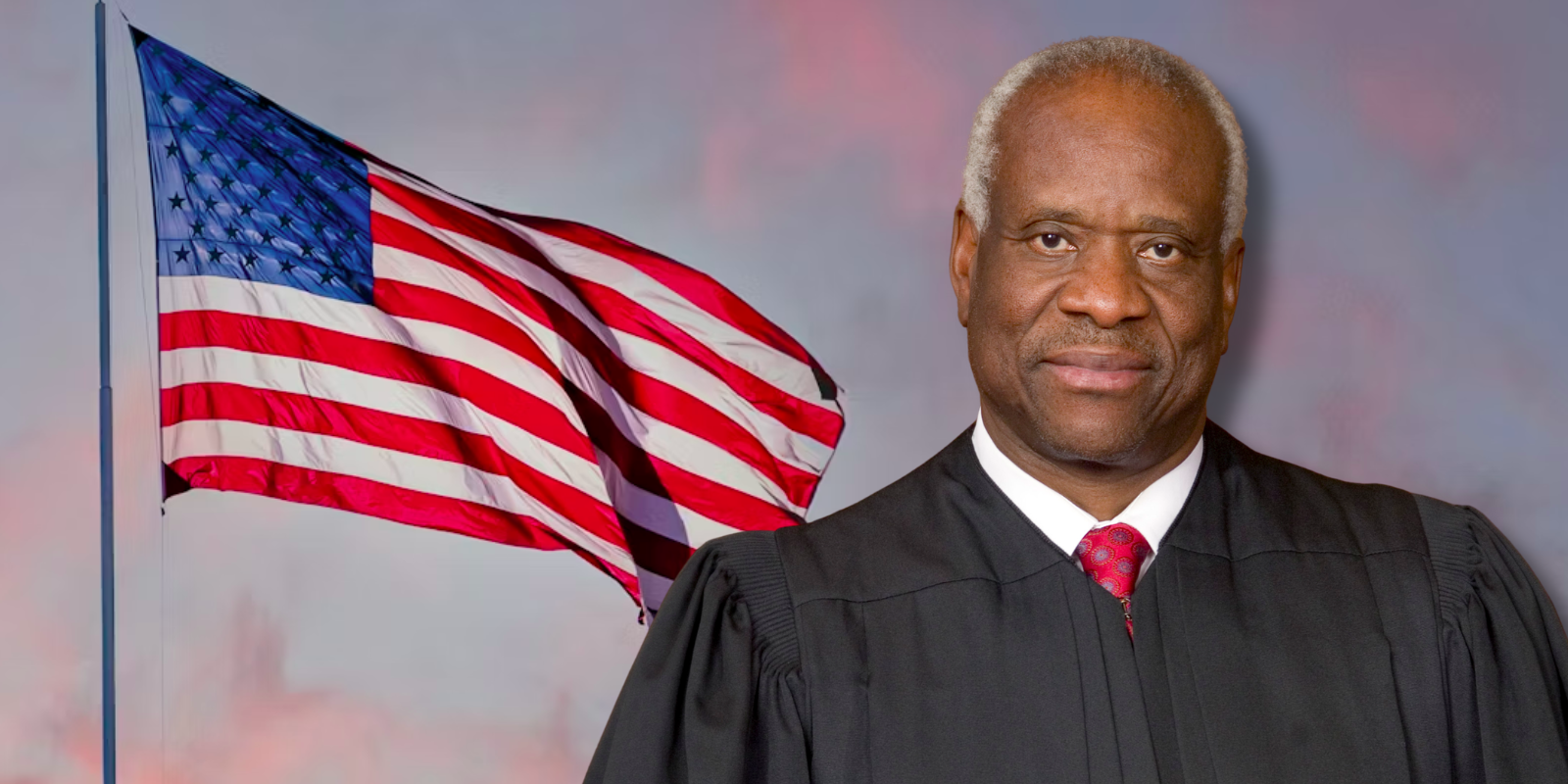
To be an American means: to have "no other homeland," to owe "no allegiance to any foreign power," and to be "subject to no other authority."

The same could not be said for the children of foreign temporary visitors," he went on to say. "Foreign temporary visitors were attached to their home country, lacked similar bonds to this country, and would not be called upon in time of war. Americans, consistent with their settler ethos, believed that citizens were the people who called a place home."
This is what we have seen with numerous immigrant groups who come in from foreign places while maintaining full ties to that place and to the customs of that place. Unlike many immigrant groups who have come to the US from Mexico, the Americas, Europe, and Vietnam, among other places, and cast off their ties, embracing America, new batches of people come in, take benefits, scam public systems, and attempt to implement the laws, cultures and customs of the land they left.
"Accordingly, domicile—a person’s legal home—played a key role in both state and national citizenship in America. A person was a 'citizen' of the state where he had his 'domicil.' Barber v. Barber, 21 How. 582, 599 (1859). When foreigners temporarily visited, their 'national character' was unchanged. The Venus, 8 Cranch 253, 278–279 (1814). Such visitors were 'strangers,' not 'subjects.' Id., at 278. A person born here but domiciled in a foreign land was therefore considered 'as much a stranger to the country as his father.'"
He makes clear that the 14th Amendment's preclusion against those becoming citizens who have fealty to other nations is correct.
In her concurrence, Justice Ketanji Brown Jackson took issue with Thomas' view, saying, oddly, both that the Supreme Court has denied "freed slaves" the promise of citizenship and that the Court can be compared to an elementary school teacher that scolds a bully and expects all bullies to therefore straighten up and fly right. She writes that "consensus about the Fourteenth Amendment's central motivation does not justify Justice Thomas's myopic treatment of it."
In her bizarre analogy, the scolding is the Wong Kim Ark ruling and the bully is the United States. "The Amendment caused a paradigm shift in the trajectory of our Nation," Jackson writes, "the teacher who scolds a student for bullying a classmate hopes the student learns the broader lesson of treating everyone with kindness, not just that one kid.
"In the aftermath of the Civil War, those who championed the Fourteenth Amendment—both within and beyond Congress—understood the assignment. Their work product used 'language that transcended race and region,' and thereby “changed and broadened the meaning of freedom for all Americans.” Instead of the limited salve the principal dissent makes it out to be, the Citizenship Clause reflects this universalist approach."
Thomas offers a much more cohesive view, and far from being myopic, it understands the roots of the issue of citizenship. "Congress implemented the principle that citizenship follows birth and domicile in the Civil Rights Act of 1866 and then in the Citizenship Clause of the Fourteenth Amendment." That Clause, he writes, "was consistently interpreted not to apply to the children of foreign temporary visitors, who were by definition not domiciled in the United States. Regardless of administration or party, the Federal Government for decades after ratification regularly denied claims to citizenship by children who were born in the United States but not domiciled here."
In his conclusion, Thomas writes "The Court today takes the extraordinary step of holding facially unconstitutional the President’s Order excluding from citizenship the children of foreign temporary visitors and illegal aliens. In doing so, the Court adds to the sad history of the Fourteenth Amendment, which was designed and understood to secure equal rights for the freed blacks but has instead been repurposed for political projects that the Reconstruction Congress did not support. Because many potential applications of the President’s Order are consistent with the original public meaning of the Citizenship Clause, I respectfully dissent."
Justice Clarence Thomas' dissent on SCOTUS birthright citizenship ruling by The Post Millennial
Powered by The Post Millennial CMS™ Comments
Join and support independent free thinkers!
We’re independent and can’t be cancelled. The establishment media is increasingly dedicated to divisive cancel culture, corporate wokeism, and political correctness, all while covering up corruption from the corridors of power. The need for fact-based journalism and thoughtful analysis has never been greater. When you support The Post Millennial, you support freedom of the press at a time when it's under direct attack. Join the ranks of independent, free thinkers by supporting us today for as little as $1.
Remind me next month
To find out what personal data we collect and how we use it, please visit our Privacy Policy



Comments