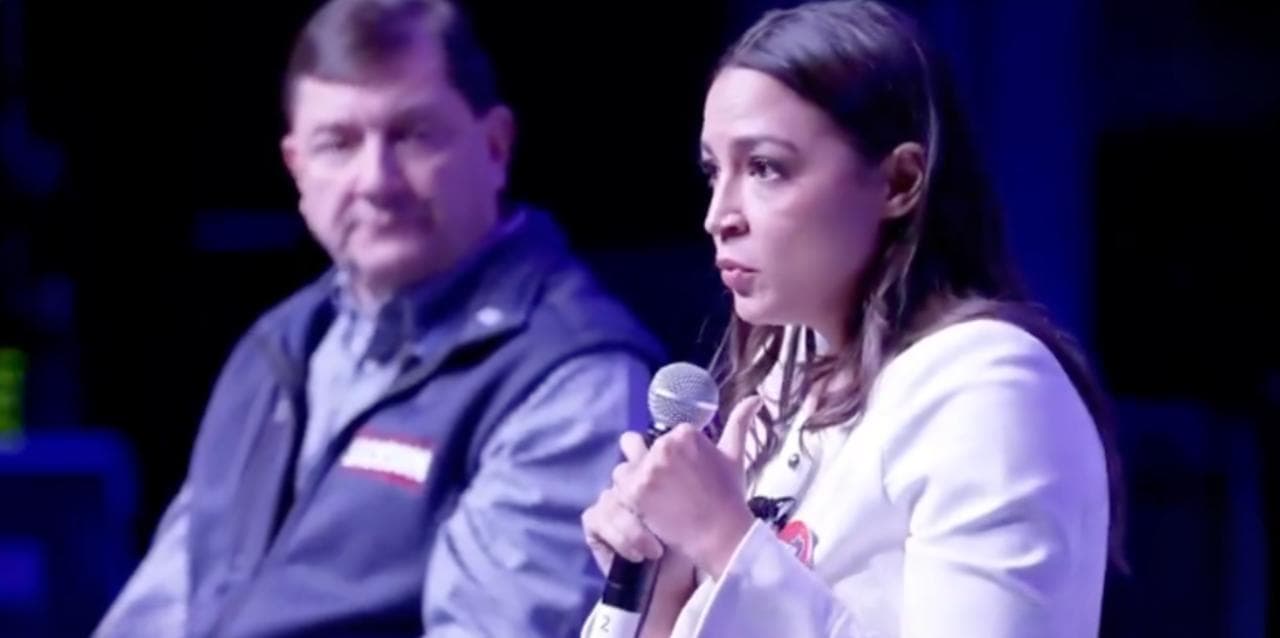
WATCH: James O’Keefe tells Jack Posobiec why he’s suing CNN and The New York Times
Both outlets claimed O’Keefe was guilty of spreading misinformation on two separate occasions.
Both outlets claimed O’Keefe was guilty of spreading misinformation on two separate occasions.

On a recent episode of Human Events Daily, host Jack Posobiec talked to Project Veritas Founder James O'Keefe about his ongoing litigation with both the New York Times and CNN.
"We sued CNN for defamation, and we sued the New York Times for defamation," O'Keefe told Posobiec. Both outlets claimed O'Keefe was guilty of spreading misinformation on two separate occasions.
https://rumble.com/embed/v1ceri3/?pub=2n05b
In the CNN case, host Ana Cabrera claimed that an incident where Project Veritas showed up outside Facebook vice president Guy Rosen’s house to ask him questions about an insider leak was "misinformation" because part of Rosen's address was visible on Twitter. The post's visibility is what caused the social media giant to ban O'Keefe citing that he shared someone's personal information.
"This was an accident. It wasn't a big deal," O'Keefe told Posobiec. In his lawsuit the Project Veritas founder noted that CNN has routinely done the same thing without facing repercussions from Twitter.
Posobiec also cited Brett Kavanaugh and how the Left "routinely does this to their targets."
The lawsuit said that "promoting misinformation" is not the same as accidentally showing an address in a video. O'Keefe called the mischaracterization "absurd," noting that "there is a difference."
The CNN case is on the docket of the 11th Circuit Court of Appeals after a judge initially ruled against O'Keefe, citing that the lamppost issue was, in fact, misinformation.
O'Keefe then called The New York Times lawsuit "ridiculous" and that "it sounds like comedy"
"We sued The New York Times for defamation because they called me deceptive and part of a disinformation campaign."
In the NYT instance the company said that O'Keefe was promoting disinformation over a video Project Veritas made over ballot harvesting fraud in Minnesota. The judge in that case told the paper that they had a responsibility to note their writing on the video was opinion and not fact.
The New York Times appealed and, according to O'Keefe, claimed that when they use the words "verifiable" and "deceptive" in their articles that they words really have no actual meaning."
O'Keefe told Posobiec that was "rich" coming from The New York Times.
Libby’s Desk
Commentary and must-reads from Libby’s desk, straight to your inbox.
TPM Newsletter
The Post Millennial’s top stories, delivered to your inbox.