
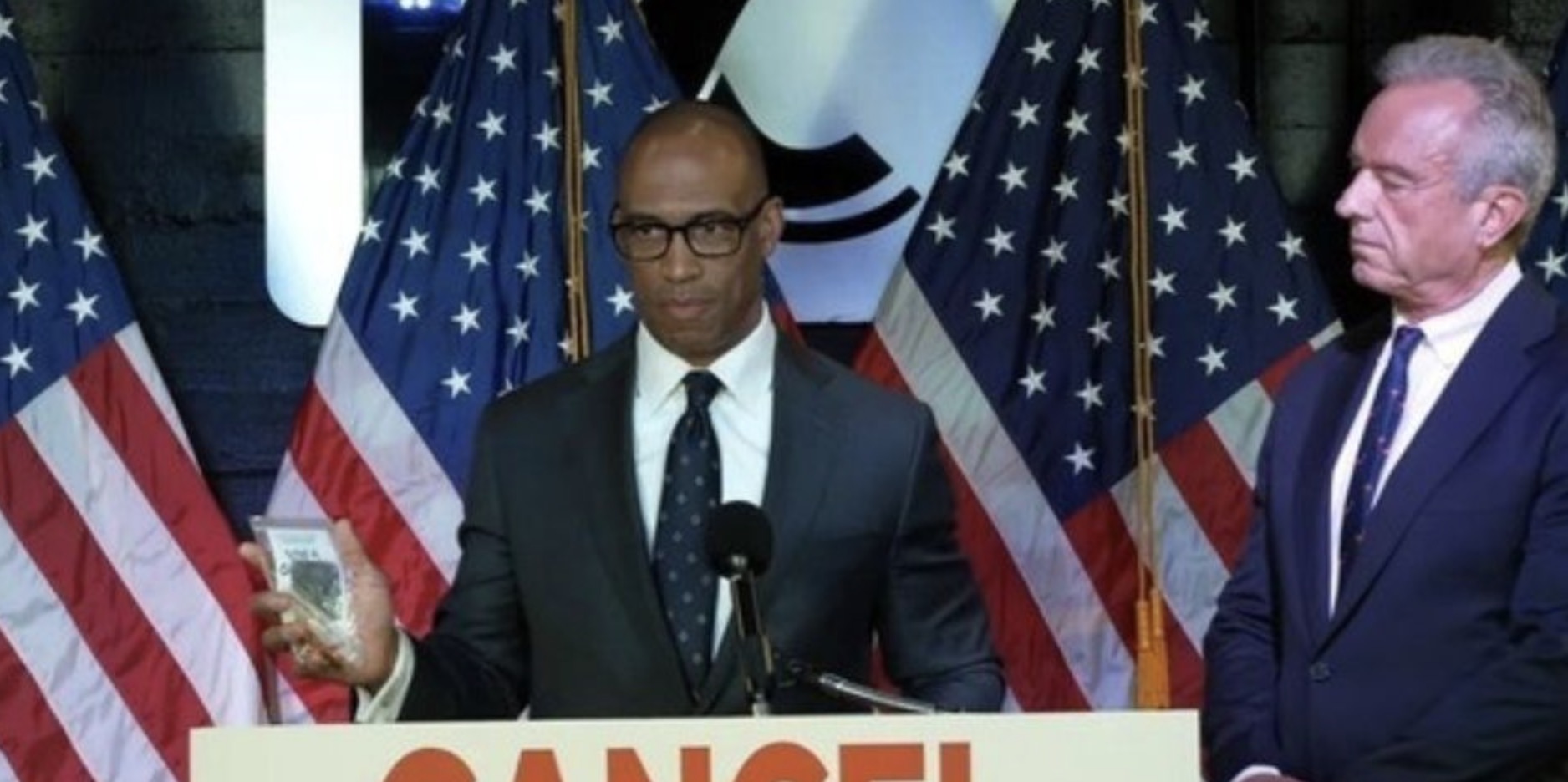
"The days of funding corrupt failure are over. The Trump administration will not enable the Homeless Industrial Complex."

Housing and Urban Development Secretary Scott Turner and Health and Human Services Secretary Robert F. Kennedy Jr. criticized California’s policies during a visit to the state, while the administration unveiled a new “Treatment First” strategy intended to shift federal homelessness policy toward addiction treatment, recovery, employment, and self-sufficiency.
“Today, we witnessed the heartbreaking realities of LA’s drug-fueled homelessness, and enough is enough,” Turner said. “Despite receiving billions in federal funding, homelessness in California has skyrocketed.”
Turner vowed that organizations accused of wasting federal money would face consequences. “Organizations like LAHSA that abuse taxpayer dollars to put its self-interests ahead of the vulnerable Americans it is supposed to serve will be held accountable,” Turner said. “The days of funding corrupt failure are over. The Trump administration will not enable the Homeless Industrial Complex.”
The administration pointed specifically to the Los Angeles Homeless Services Authority (LAHSA), the lead agency coordinating the region’s homelessness response. According to HUD, LAHSA has received more than $1 billion in taxpayer funding since 2013. Turner froze federal funding to the agency in June amid allegations of mismanagement, fraud, and abuse.
The administration said Los Angeles has received more federal homelessness funding than any other jurisdiction in the country and that HUD funding to the region nearly tripled over the past decade while homelessness doubled.
Kennedy said federal dollars would instead be directed toward programs capable of demonstrating that people are moving from the streets into recovery. “We cannot solve homelessness by funding systems that perpetuate it,” Kennedy said. “We will fund programs that get people off the streets, into treatment and recovery, and back to self-sufficiency. We will demand results, hold failing programs accountable, and fund what works.”
The administration simultaneously released its Best Practices Toolkit: Addressing Homelessness and Addiction Through “Treatment First,” developed through the Substance Abuse and Mental Health Services Administration.
The 40-page document represents a direct challenge to the “Housing First” model that has dominated homelessness policy in California and other Democrat-run jurisdictions. The administration argues that providing housing without sufficiently integrating addiction treatment and recovery services has left people trapped in cycles of homelessness and substance abuse.
The toolkit states that Housing First approaches “too often fail to align services around long-term recovery-oriented outcomes,” resulting in fragmented care, relapse, and recurring homelessness. It instead calls for evidence-based addiction treatment tied to measurable goals including sobriety, employment, stable housing, improved mental health, and reintegration into families and communities.
The administration's framework also calls for drug- and alcohol-free living environments, phased recovery housing, employment training, peer recovery specialists, partnerships with faith-based organizations, and greater accountability for organizations receiving taxpayer money.
Rather than judging programs primarily by how many services they provide, the toolkit proposes tracking outcomes including 12-month abstinence from drugs and alcohol, employment, independent or market-rate housing, recidivism, and successful transitions between programs.
“Treatment must come first. Recovery begins when we connect people with effective care, not leave them trapped in addiction and homelessness,” Kennedy said. “This toolkit gives communities practical, evidence-based strategies to expand treatment, support lasting recovery, and help people reclaim their independence.”
The plan also calls for a coordinated response to homeless encampments involving law enforcement, treatment providers, housing services, healthcare organizations, public works agencies, and community and faith-based groups. One model highlighted in the report, the Homeless Outreach Services Teams (HOST), reportedly resolved more than 1,500 encampments without arrests, litigation, or use of force.
Turner said housing remains part of the solution but argued that simply placing people indoors without confronting addiction and other underlying problems is insufficient. “Housing is essential, but housing alone is not enough,” Turner said. “This toolkit gives communities a practical playbook designed by experts across the country to put treatment first and help more homeless Americans achieve lasting recovery, stability, and independence.”
Powered by The Post Millennial CMS™ Comments
Join and support independent free thinkers!
We’re independent and can’t be cancelled. The establishment media is increasingly dedicated to divisive cancel culture, corporate wokeism, and political correctness, all while covering up corruption from the corridors of power. The need for fact-based journalism and thoughtful analysis has never been greater. When you support The Post Millennial, you support freedom of the press at a time when it's under direct attack. Join the ranks of independent, free thinkers by supporting us today for as little as $1.
Remind me next month
To find out what personal data we collect and how we use it, please visit our Privacy Policy




Comments