

“Title VI is clear: no student should be advantaged or disadvantaged in admissions because of the color of their skin.”

The Department of Justice’s Civil Rights Division and Department of Education concluded that Berkeley Law violated Title VI of the Civil Rights Act of 1964 in selecting its incoming classes of 2024 and 2025. The investigation examined the school’s practices following the Supreme Court’s 2023 Students for Fair Admissions v. Harvard decision, which prohibited the use of race in college admissions.
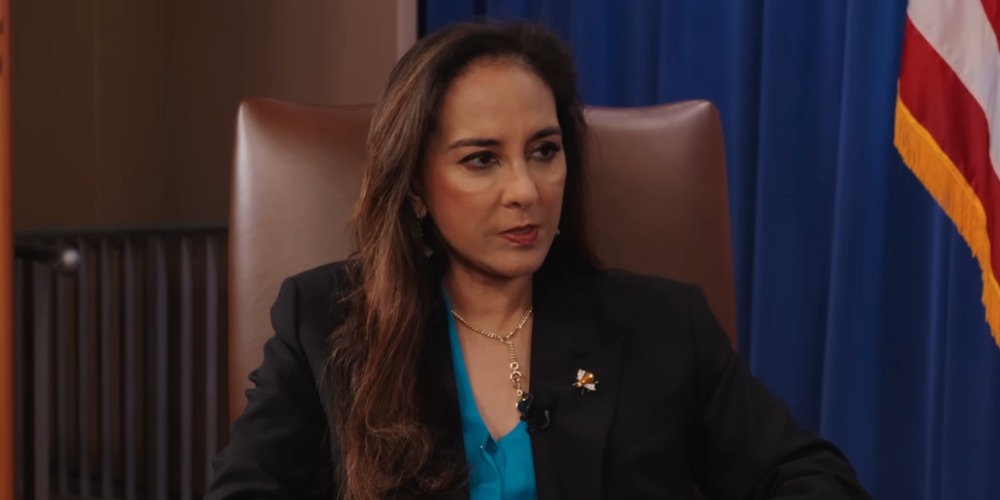
“Berkeley Law School’s deliberate efforts to circumvent the Supreme Court’s decision in SFFA demonstrate a complete disregard for the rule of law,” Assistant Attorney General Harmeet K. Dhillon said. “The Department will continue to aggressively pursue compliance from schools who attempt to racially manipulate their student bodies in violation of federal law.”
According to federal investigators, Berkeley Law continued using race, essay prompts, and other methods to pursue racial diversity goals after the Supreme Court ruling.
Investigators said the school's application asked applicants to specify their racial identity so that admitted students could be “grouped” with others sharing the same “primary identity.” The DOJ characterized the practice as intentionally separating students based on race.
Investigators also found significant disparities in LSAT scores among admitted students.
According to the federal findings, when admissions data from 2024 and 2025 was combined, half of admitted black applicants had LSAT scores below those of 95 percent of admitted white applicants. 37 percent of admitted black applicants had scores below those of 99 percent of admitted white applicants.
The government's analysis further concluded that in 2025, black applicants had 5.8 times higher odds of admission than comparable white applicants.
“Title VI is clear: no student should be advantaged or disadvantaged in admissions because of the color of their skin,” Department of Education Assistant Secretary for Civil Rights Kimberly Richey said.
“The Supreme Court made equally clear that universities cannot evade the law by finding new ways to make race a factor in admissions decisions,” she added. “Today’s findings demonstrate that the Trump Administration will work to hold institutions accountable and ensure students are judged on their individual merit, not their race.”
The findings are the latest in a series of federal investigations into whether universities continued using race in admissions after the Supreme Court's 2023 ruling.
In August, the DOJ reached a similar conclusion regarding Duke University School of Law, finding that Duke continued giving admissions preferences to black and Hispanic applicants after the Supreme Court decision. Federal investigators found that in 2025, a black Duke Law applicant had roughly 3.5 times the probability of admission as an Asian applicant with similar LSAT scores and undergraduate GPAs.
The DOJ said Duke officials used ostensibly race-neutral methods, including essay questions and applicant characteristics correlated with race, to pursue racial diversity goals. The department concluded that “highly qualified white, Asian, and other students were denied admission on the basis of their race.”
Berkeley had already been placed under federal scrutiny more than a year before Wednesday's findings. In March 2025, Attorney General Pam Bondi launched compliance investigations into admissions policies at Berkeley, UCLA, UC Irvine and Stanford to determine whether the universities were complying with the Supreme Court decision.
The investigation has since produced findings against multiple University of California schools.
In May, the DOJ determined that UCLA's David Geffen School of Medicine intentionally discriminated against white and Asian applicants. Investigators said admitted black and Hispanic applicants had, on average, lower academic qualifications than their white and Asian counterparts.
A month later, investigators found that the UC Davis School of Medicine had also discriminated based on race. According to the DOJ, Davis officials used socioeconomic factors as racial proxies after the Supreme Court decision. Federal investigators found that black and Hispanic applicants were admitted at rates as much as six times higher than white and Asian applicants despite having lower average academic qualifications.
The DOJ has also found that Yale School of Medicine intentionally discriminated against white and Asian applicants following the Supreme Court ruling, alleging that officials studied ways of using racial proxies to circumvent the prohibition on race-based admissions.
The Berkeley investigation differs in one notable respect: the Justice Department said the law school refused to comply with requests for compliance information during the investigation. Nevertheless, investigators said the evidence they obtained was sufficient to conclude that Berkeley deliberately discriminated against Asian and white applicants and that the discrimination is ongoing.
Because UC Berkeley receives federal financial assistance, it is subject to Title VI. The Justice Department said it will seek a voluntary resolution agreement requiring the university to bring its admissions and oversight practices into compliance with federal law.
If an agreement cannot be reached, the department said it will pursue enforcement action, including litigation.
Powered by The Post Millennial CMS™ Comments
Join and support independent free thinkers!
We’re independent and can’t be cancelled. The establishment media is increasingly dedicated to divisive cancel culture, corporate wokeism, and political correctness, all while covering up corruption from the corridors of power. The need for fact-based journalism and thoughtful analysis has never been greater. When you support The Post Millennial, you support freedom of the press at a time when it's under direct attack. Join the ranks of independent, free thinkers by supporting us today for as little as $1.
Remind me next month
To find out what personal data we collect and how we use it, please visit our Privacy Policy





Comments