
"I don’t believe that the hearing needs to close, or there’s even portions of the hearing that really needs to be closed," the state said.

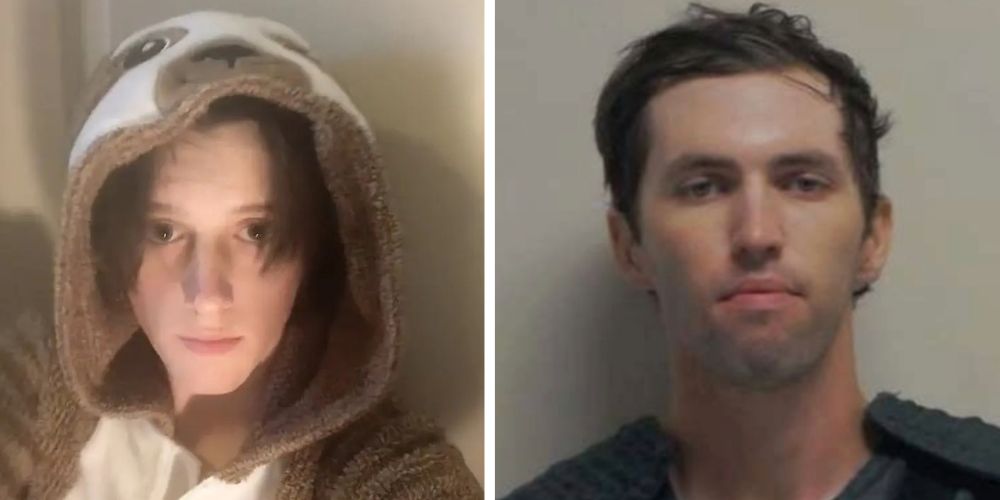
The court heard arguments on Tuesday regarding the defense’s motion to close portions of the forthcoming preliminary hearing of Tyler Robinson, the man charged with assassinating Turning Point USA founder Charlie Kirk, and to seal some of the exhibits that will be presented in the hearing that will take place in July. The state said it should not be closed, and revealed some of the testimony and exhibits they intend to present.
The state said it favored the court barring the media and public "from physically handling the exhibits and copying the exhibits that are admitted during the preliminary hearing." He said in regard to the closing of the hearing, "we think that opening these proceedings creates confidence in the system." He said that "reliable hearsay is a staple of preliminary hearings."
Judge Graf asked if the state anticipated presenting any evidence that would require a closed portion of the hearing, to which the state attorney said they did not. He said that five officers will testify "to personal observations, observations from other officers. They will also provide foundation for exhibits that will come in." He said that there will also be a recorded video statement from Lance Twiggs, the transgender lover of Robinson. He also said there are two videos filmed by those at Utah Valley University on the day of the killing that depict the shooting, which he described as "sensitive." He said that if they are displayed in an open proceeding, the monitors "could be turned away from the public’s view … but I don’t believe that the hearing needs to close, or there’s even portions of the hearing that really needs to be closed."
Defense attorney Staci Visser said that the "state and the defense are mostly on the same page about the exhibits" that will be presented in the hearing, saying that "it seems that the state does not intend to offer exhibits in such a way that they will be viewable by the gallery." She said that if "for some reason" the exhibits need to remain in the record, "we have provided a detailed table to the court of what is already categorized under the rules of judicial administration as private, protected, and safeguarded, and we’re asking the court to ensure that the records are held that way."
In regard to closing the preliminary hearing, Visser argued that the entire hearing should be closed, with a transcript released at a later date. "Our solution, what we see, is closing the preliminary hearing, and thereafter providing a transcript of what occurred during the preliminary hearing that can account for all of the evidence that wouldn’t be admissible at trial. That’s the solution that we’re proposing here, that’s the only way we see that we can protect our clients’ right to a fair trial and avoid evidence getting out that potentially is going to be challenged in the future and may not ultimately be used or admissible at trial."
She said that "most of the preliminary hearing, as far as we can tell, is going to be based off of reliable hearsay," and that the prosecution is going to be calling five officers in the hearing "to discuss a very extensive investigation." She said that "we're not in a very good position right now to know what that testimony is going to be based on personal knowledge versus reliable hearsay from other officers, as defined by the rule."
She said "we believe the only way to really prevent" the media misinterpreting and facilitating "misinformation about the case" is to "control what’s coming out of this courtroom. So, that is why we’re asking to close portions of the preliminary hearing if we can narrow it down, honestly, I think that’s a question only the state can answer, or the entirety of it and we can pick through it after."
Judge Tony Graf pushed back on the defense’s proposed solution, saying, "simply saying closing the whole hearing, I don’t think that would conform with narrowly tailored. And saying, let’s just close the whole thing and then pick it apart afterward, wouldn’t you agree that’s a bit broad?" He added, "that's not the intent of case law, or the rules that we get to just shut it all down and then figure out afterward, or do you have a different interpretation?"
She said the alternative is "we essentially make objections as we go through the hearing, which will probably take quite a bit of time and extend the proceedings significantly. So, if that’s the preference, we can absolutely do that."
Powered by The Post Millennial CMS™ Comments
Join and support independent free thinkers!
We’re independent and can’t be cancelled. The establishment media is increasingly dedicated to divisive cancel culture, corporate wokeism, and political correctness, all while covering up corruption from the corridors of power. The need for fact-based journalism and thoughtful analysis has never been greater. When you support The Post Millennial, you support freedom of the press at a time when it's under direct attack. Join the ranks of independent, free thinkers by supporting us today for as little as $1.
Remind me next month
To find out what personal data we collect and how we use it, please visit our Privacy Policy


Comments