
"Because a preliminary hearing is limited to determining probable cause rather than guilt or innocence, due process does not necessarily require all evidentiary safeguards applicable at trial," he said.

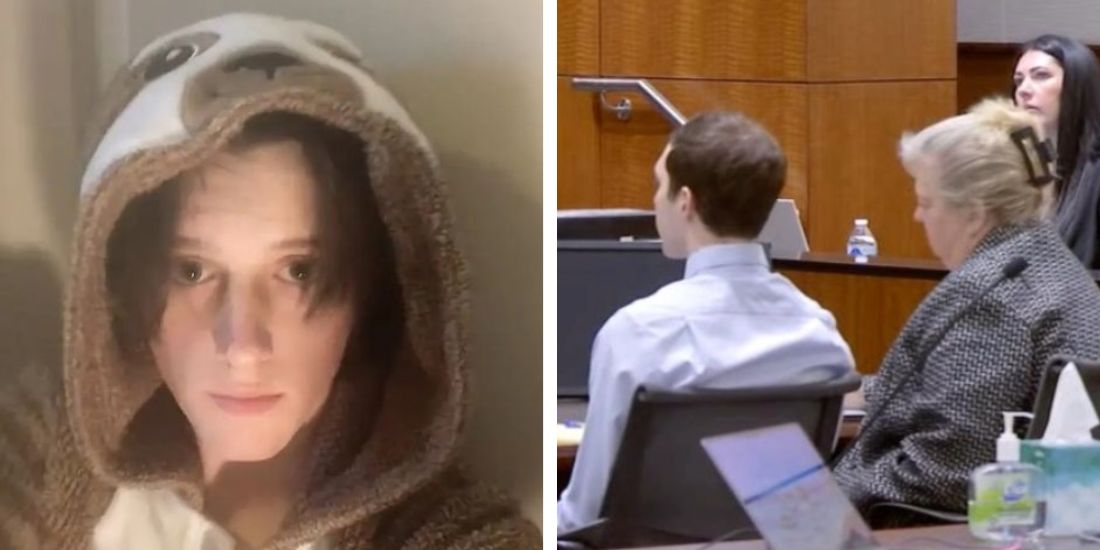
Judge Tony Graf on Monday blocked a motion from the defense team representing Tyler Robinson, the man charged with the killing of Turning Point USA founder Charlie Kirk. The motion sought to block the use of hearsay evidence in the forthcoming preliminary hearing, set for July 6. Graf also ruled on a motion to have Lance Twiggs, the transgender lover of Robinson, testify in person at the preliminary hearing. Graf blocked that motion as well.
Graf said the court was "not persuaded" by the defense’s argument that allowing such reliable hearsay evidence would violate Robinson’s constitutional rights. He also said, "Defendant’s arguments rest on the premise that effective assistance of counsel requires access to the full range of adversarial tools, including cross-examination, at every stage of the criminal proceeding. The court is not persuaded by defendant’s argument."
"Because a preliminary hearing is limited to determining probable cause rather than guilt or innocence, due process does not necessarily require all evidentiary safeguards applicable at trial," he said. The preliminary hearing is set to take place the week of July 6 in Utah. The hearing had been pushed back from May after a successful motion from the defense to move the hearing.
In regard to the defense’s motion to bring Twiggs in to testify in person at the preliminary hearing, Graf said, "defendant asserts that he intends to cross-examine Mr. Twiggs extensively concerning the reliability and credibility of his statements, his immunity agreements with the state and federal prosecutors, his state of mind, and the surrounding circumstances of the alleged offenses." Graf said that under Utah law, "this does not establish a basis to require live testimony at a preliminary hearing."
Graf said that the court "cannot conclude on the present record that the state’s proffer would become wholly lacking or incapable of supporting a reasonable inference of probable cause under the standards governing preliminary hearing."
"Defendant has identified anticipated impeachment and credibility evidence, but has not identified specific testimony reasonably likely to negate probable cause," he said. "Given the limited purpose of the preliminary hearing and the state’s ability to proceed through reliable hearsay, the court concludes that enforcement of the subpoena would be unreasonable."
Regarding the preliminary hearing, Graf previously denied a motion from the defense seeking to close portions of the hearing to electronic media coverage, saying that the defense had not shown that the proceedings remaining public would "create a realistic likelihood of prejudice to defend its right to a fair trial." In Monday's hearing, Graf noted that those attending the preliminary hearing in the audience would not be able to bring in any kind of electronic devices, from laptops and cell phones to smart watches and camera glasses.
Powered by The Post Millennial CMS™ Comments
Join and support independent free thinkers!
We’re independent and can’t be cancelled. The establishment media is increasingly dedicated to divisive cancel culture, corporate wokeism, and political correctness, all while covering up corruption from the corridors of power. The need for fact-based journalism and thoughtful analysis has never been greater. When you support The Post Millennial, you support freedom of the press at a time when it's under direct attack. Join the ranks of independent, free thinkers by supporting us today for as little as $1.
Remind me next month
To find out what personal data we collect and how we use it, please visit our Privacy Policy



Comments