
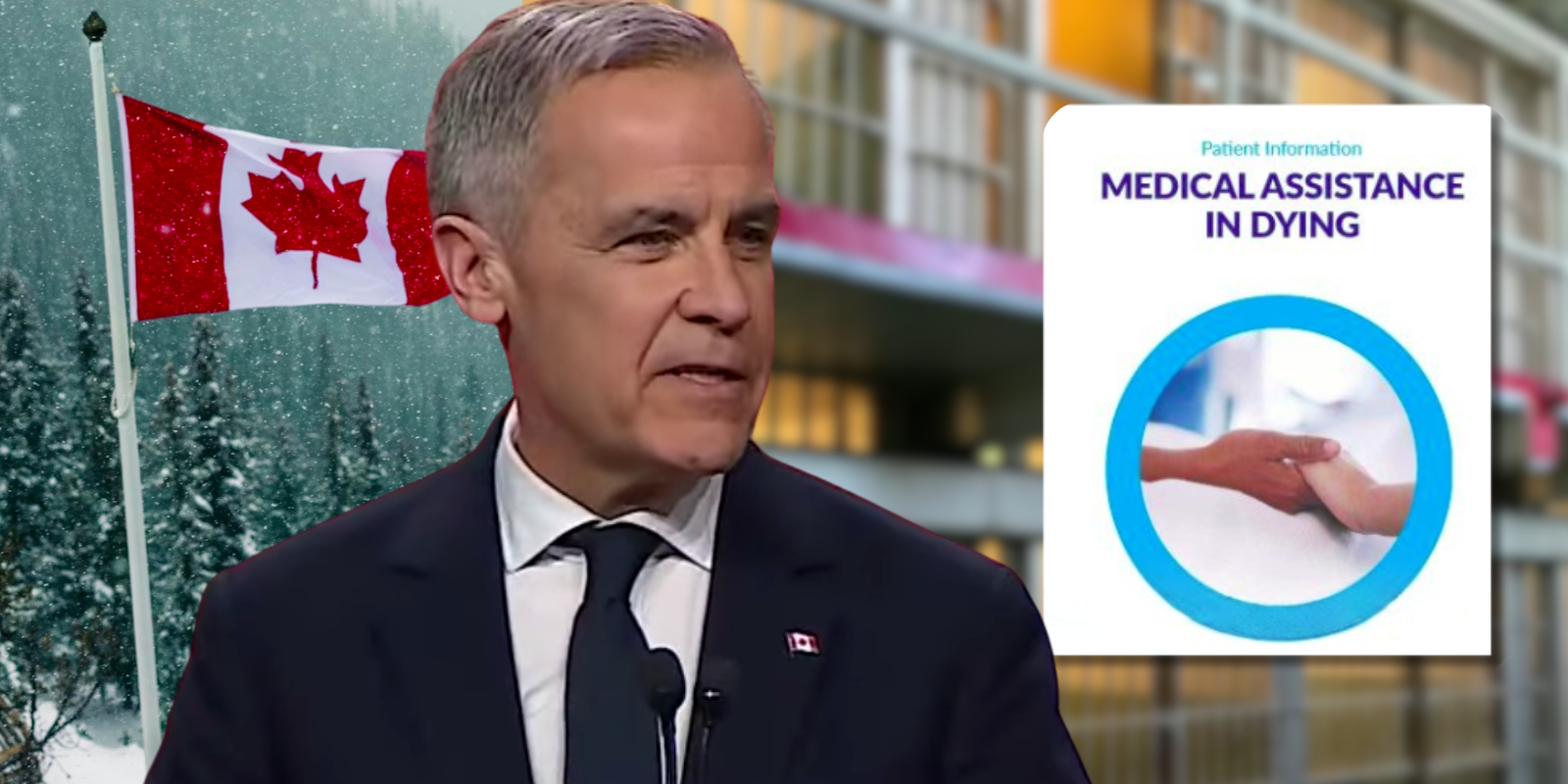
The Canadian government under Prime Minister Mark Carney has shown support for maintaining the MAID framework.

An Order Paper response confirmed by the Correctional Service of Canada shows the inmates died before completing their prison sentences. The records indicate two inmate deaths by MAID in 2018, followed by one each in 2019, 2020, and 2021. The number rose to four in 2022, dropped to one in 2023, increased again to four in 2024, and one additional death has been recorded so far in 2025.
The data does not identify where the deaths occurred, the sex of the inmates, or the specific reasons for the requests. It also does not indicate whether the deaths fell under Track 1 MAID cases, involving those whose natural death was reasonably foreseeable, or Track 2 cases, which apply to individuals whose deaths were not imminent. Since MAID became legal, 67 federal inmates have applied for the procedure, with applications increasing over the past two years.
Canada legalized MAID in 2016 under the Liberal government of former Prime Minister Justin Trudeau. Since then, eligibility has expanded beyond terminal illness. A report from the Euthanasia Prevention Coalition estimates that roughly 90,000 people have died by MAID since the program began. In 2024 alone, 16,499 people died from MAID.
Concerns about the expansion have been raised by doctors. An Associated Press investigation and reporting by the Daily Mail documented physicians describing moral distress over providing MAID to patients who were not terminally ill. Some doctors said requests were driven by factors such as homelessness, debt, grief, or dissatisfaction with life circumstances.
One Ontario physician told reporters a patient with lung disease sought MAID primarily because he was homeless and feared long-term care. Other cases cited by doctors included patients requesting assisted suicide due to obesity-related depression or prolonged grief following personal losses.
Internal discussions among physicians, some shared in confidential forums, reflected uncertainty about whether such cases should qualify for euthanasia. An AP investigation also cited a classified Ontario government report acknowledging errors as the program expanded, including the case of a 74-year-old blind man who sought MAID over concerns his eyesight would not improve.
The Liberal government previously sought to extend MAID eligibility to individuals suffering solely from mental illness. That expansion was delayed until 2027 following opposition from provinces and advocacy groups. The Canadian government under Prime Minister Mark Carney has shown support for maintaining the MAID framework.
Powered by The Post Millennial CMS™ Comments
Join and support independent free thinkers!
We’re independent and can’t be cancelled. The establishment media is increasingly dedicated to divisive cancel culture, corporate wokeism, and political correctness, all while covering up corruption from the corridors of power. The need for fact-based journalism and thoughtful analysis has never been greater. When you support The Post Millennial, you support freedom of the press at a time when it's under direct attack. Join the ranks of independent, free thinkers by supporting us today for as little as $1.
Remind me next month
To find out what personal data we collect and how we use it, please visit our Privacy Policy






Comments