
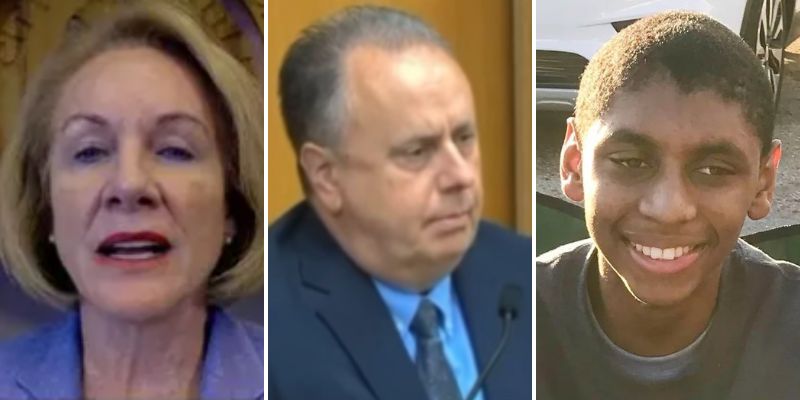
"I was given direct orders not to enter."

The testimony on the second day of the trial before Judge Timothy O'Donnell bolstered the plaintiffs' argument that the city's abandonment of the Seattle Police East Precinct and prohibition on officers entering the CHAZ/CHOP zone created a "state-created danger," leading to Antonio's death and rendering the city liable for negligence in the wrongful death lawsuit.
The autonomous zone emerged in June 2020 amid nationwide protests following the death of George Floyd in Minneapolis police custody. Antifa and Black Lives Matter activists seized control of a six-block radius in Seattle's Capitol Hill neighborhood, erecting barricades and concrete barriers that were provided to protesters by the City of Seattle. Then-Mayor Jenny Durkan, a Democrat, infamously described the occupation as a "summer of love" and a "block party," while ordering SPD to vacate the precinct within the zone. This stand-down policy barred police and emergency responders from entering, leaving residents and activists to self-govern amid escalating chaos and violence.
Around 3 am on June 29, 2020, Antonio Mays Jr., a black teenager from California who had traveled to Seattle to partake in the anti-police racial justice protests after being inspired by rhetoric from media coverage, was shot dead by "CHAZ security" while driving a vehicle with his 14-year-old friend, Robert West, who was struck by gunfire but survived. Protesters dialed 911 to report the emergency, but help never came. Antonio died after 25 minutes of agonizing pain, said attorney Evan Oshan, representing the Mays family.
Detective Cruise's testimony offered insight as to why emergency personnel failed to respond to the shooting scene until roughly five hours later. Cruise told the Court that immediately upon learning of the shooting, he attempted to mobilize to the scene but was prohibited from entering at the direction of assistant police chief Thomas Mahaffey. Mahaffey had been receiving directives from the City of Seattle on how the police could respond to the CHAZ/CHOP zone.
"I was given direct orders not to enter," Cruise stated, specifying that the prohibition applied even after confirmation of the fatal shooting. Cruise stated that the ban persisted for nearly five hours, which allowed protesters to collect shell casings, tampering with the evidence. The detective said protesters were able to "breach" the crime scene because hours went by "without any police personnel there." His testimony appeared to lay the foundation for the plaintiffs' negligence claim by confirming that Seattle Police abandoned its active-shooting/crime-scene protocol at the city's direction.
A suspect has not yet been apprehended in Antonio's homicide case. Audio clips from the scene, also admitted as evidence, captured protesters' panic upon realizing Seattle Fire units would not be entering the zone to render aid. "Fire is leaving. They are not here to help," said protester Ashley Dolores in the video clip, who went on to falsely claim that "white supremacists are coming now, they are shooting here at CHOP." The shooters were allegedly part of "CHAZ security," a group of armed protesters who patrolled the barricades with rifles. The only victims that tragic night were two black teenagers.
Protesters acting as "good Samaritans" attempted to save the life of Antonio Mays Jr. by placing his body in a vehicle and transporting him to a designated casualty area that the City of Seattle created outside of the deadly zone for injured individuals to receive aid. However, when those individuals transporting Antonio attempted to flag down an ambulance, the medics fled. Additionally, a 911 dispatcher told them to go to the designated area, but a glitch in the system labeled it a "scene of violence," resulting in emergency personnel not being at the staging location, attorney Oshan said.
Seattle Fire Captain Joshua Pearson, who was in the medic unit that fled, told the Court that he and his team made the decision not to stop for the vehicle because it "recklessly" approached the unit with a man, allegedly armed with a rifle, hanging on to the top of the vehicle's racks. Evidence of the armed individual was not presented to the jury. Additionally, Pearson testified that Seattle Fire had been taking orders from SPD regarding response to the CHAZ zone, as medics were prohibited from entering the area without a police escort due to the danger, he said.
Powered by The Post Millennial CMS™ Comments
Join and support independent free thinkers!
We’re independent and can’t be cancelled. The establishment media is increasingly dedicated to divisive cancel culture, corporate wokeism, and political correctness, all while covering up corruption from the corridors of power. The need for fact-based journalism and thoughtful analysis has never been greater. When you support The Post Millennial, you support freedom of the press at a time when it's under direct attack. Join the ranks of independent, free thinkers by supporting us today for as little as $1.
Remind me next month
To find out what personal data we collect and how we use it, please visit our Privacy Policy

Comments