
"Yeah. And that's, you know, I always think of myself as a Christian who hates Christianity."

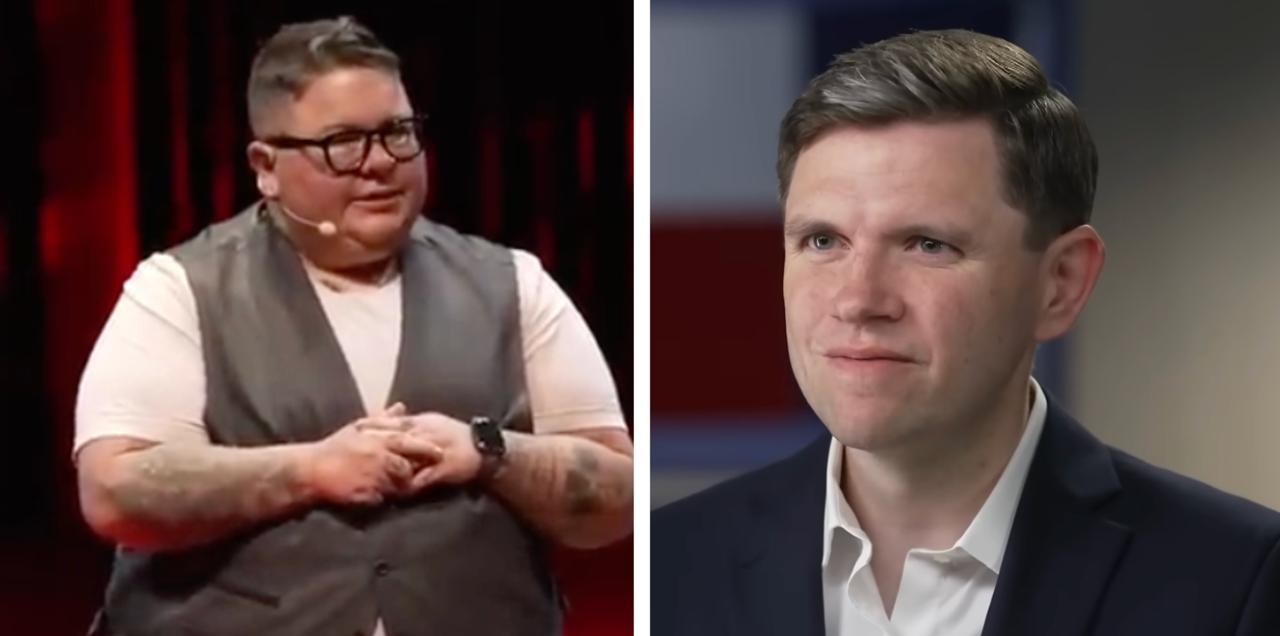
Texas Senate hopeful Democrat James Talarico joined queer activist theologian Dr. Roberto Che Espinoza, a trans man, and Rev. Anna Golladay on the Activist Theology podcast to speak about the intersection of faith, politics and morality. During that 2021 interview, he revealed that he thinks of himself "as a Christian who hates Christianity."
Talarico spoke to the two podcast hosts about the responsibility of the left in the United States, of Democrats to take up the helm of morality. He called on Democrats to do a "better job." He has also said that he supports abortion because of his Christian faith, citing the Virgin Mary as having given "consent" to be impregnated.
"We have ceded moral language to the right for the past, what, 40, 50 years, right?" Talarico said. "That is because they recognize that people can't live on bread alone, right? We on the left always try to meet people's material needs only, right? They need a higher wage, they need these benefits, they need a high-paying job, which is true, absolutely true. But people also need meaning and they need purpose, right? They need connection. Those are things you can legislate with a 12-point plan, right?"
He said that he's had "doubts" about the usefulness of electoral politics, saying, "Is that the place where that change can really occur? I've had doubts about whether electoral politics, which I love and I believe in, and I believe in democracy. But I wonder, is it up to the task, especially in a time of climate change, right? We're running out of time to change our moral foundations. And I fear if we don't act soon, it might be over for our species."
Espinoza said that she believes there's not only a "spiritual crisis," but a "theological crisis, which is connected to a moral crisis." She has also spoken about the danger of disassociating mind from body, revealing that she was sexually abused as a child.
"Because as I was trained in the field of theology and ethics," she went on, "is that all theology is ethics. Because the ways that we believe about certain things, even to like where we buy our coffee, are like ethical decisions. And so when we look at things like electoral politics, we can see this at the federal level down to the state level.
"So many of our politics and policies that are legislated and then operationalized in communities, have a very particular strand of Judeo-Christian theology attached to them. Anthropology, right? What we think about humans, and by that, we mean white-bodied people," she went on. "And so anybody who is not white is in a different anthropological category, right? That shows up in things like mass incarceration or the school-to-prison pipeline."
Espinoza said that she moved from California back to the South after Trump was elected in 2016 to "create conditions for culture shift, which might yield different electoral politics, different ways we think about church, whatever that means, right?” To Espinoza, that "migration from California back to the South, created conditions for the activist theology to be birthed."
Part of that is to "steward" what she says are "life-affirming systems, which theologically sound very Christian to me, but also show up in other traditions," in other words, Christianity is just one vehicle to get to the same place.
She asked Talarico: "I see something like the Activist Theology Project trying to really dig into the root system to help us accelerate this imagination that allows you to live out your theology and ethics. Will going to seminary help you achieve something? Well, that's still a dominant system, right? Into which you'll be conscripted. And how do we opt out of these systems that we're conscripted into in such a way that we can live a generative, imaginative life? That's what I'm curious about."
"Yeah. And that's, you know, I always think of myself as a Christian who hates Christianity," Talarico said.
"And like, I always get, I always get drawn back into it because nowhere else, in no other political philosophy, in no other economic theory, do I find anything as truly radical or revolutionary as the teachings of that barefoot rabbi, right?" He then said that the teachings of Jesus "look a lot like, you know, the teachings of the Buddha and, and from other, other great mystical traditions.
"But I can't find anything, wherever I look," he said, "that really, really is, is quite the same inversion of values that I think we need, right? And so, but the reason that I think Christianity in particular can be powerful in, in our context in this country is because so many of our political opponents share that kind of, that tradition. It's, it's very strange every time I think about it, that, that the most popular figure in our country, particularly on the conservative right, is this, you know, socialist anarchist from ancient Palestine, right?"
“Like, it's such a strange paradox to me. But I feel like there's opportunity there. There is a moral DNA, a moral language kind of encoded into our, into our cultural fabric, or I should say the dominant cultural fabric in the United States," Talarico said.
"And if we can draw upon that to, to start to shift the culture towards something that's more life-affirming, life-enhancing, life-furthering, then, then we as kind of people with functioning hearts, I think have a moral obligation to do so. But, but, you know, as far as I can see politically, my colleagues on my side of the aisle aren't attempting to do that, right? We are arguing within a very kind of neoliberal framework of kind of talking about policies that are about productivity and about things that will generate revenue. We are not speaking to that moral language encoded in our, in our cultural DNA."
Powered by The Post Millennial CMS™ Comments
Join and support independent free thinkers!
We’re independent and can’t be cancelled. The establishment media is increasingly dedicated to divisive cancel culture, corporate wokeism, and political correctness, all while covering up corruption from the corridors of power. The need for fact-based journalism and thoughtful analysis has never been greater. When you support The Post Millennial, you support freedom of the press at a time when it's under direct attack. Join the ranks of independent, free thinkers by supporting us today for as little as $1.
Remind me next month
To find out what personal data we collect and how we use it, please visit our Privacy Policy





Comments