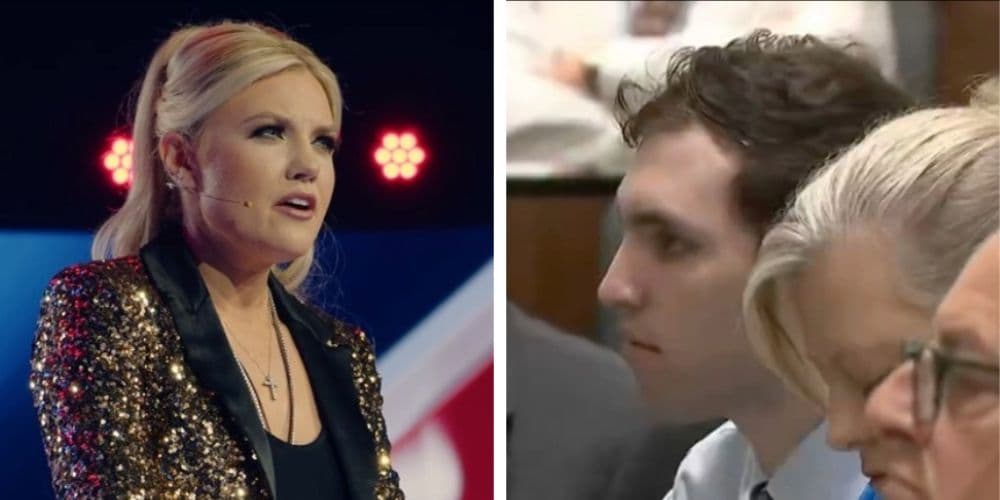
Chloe Cole is only 18 years old, and in her short life, she has undergone sex change treatments, come to regret them, and decided to speak out about that process and the harms done to children in the name of gender ideology.
Cole spoke to Jay Richards at the Heritage Foundation on Tuesday as part of the Gender Identity Summit, telling the public how she came to believe that she was not a girl, but meant to be a boy. The beauty standards she came into contact with did not match what she saw in herself, her broad shoulders.
https://rumble.com/embed/v1qsv7q/?pub=2n05b
"I started noticing that I didn’t really look like all the other girls," she said, going on to say. "I also started developing some body issues around this time."
"I started using social media. I got my first phone at 11 and the first platforms I used were primarily Instagram and Snapchat, which those are very image-based," Cole said. She felt that she was nothing like the curvy women who were sexually celebrated on the platform.
"The first therapist I had was pretty lousy, she didn’t do much," Cole said, noting that the therapists she had were all on board with the "affirmative approach."
There were only 3 to 4 months between the diagnosis and the referral to an endocrinologist to obtain puberty blockers. The first endocrinologist she saw refused to give a prescription because of the potential impact on her brain, so the family switched doctors to obtain the drugs.
About 6 months after the blockers, she started taking testosterone. She was only 13 years old.
"I started puberty pretty early, I was only about 9 years old," she said, noting that "this fueled my dysphoria."
The puberty blockers made her depressed, lethargic, and put her into early menopause. She was experiencing hot flashes. Once she took the testosterone, she "felt great. I finally had hormones back in my body," she said.
"I was healthy and confident," she said. The first change was that her voice dropped, she began to develop more muscle, and her body began to take on more masculine characteristics. Her eyebrows got thicker, her jawline became sharper. And she liked how she looked.
She was a social outcast in middle school, and had been prior to the gender transition. The transition made that a little bit worse, and the other kids picked on her some. "There was one particular boy who was really gross, he would make weird comments about me to other people. He would even spit on me in class."
Toward the end of 8th grade, he sexually assaulted her in a classroom and grabbed her chest. This made her want to "hide that part" of herself, and she didn’t want anyone to see that part of her for the rest of her life, she told Richards. She began to wear a chest binder after this, and wore it for 8-12 hours per day, even while swimming.
It was only a few years after that that she went under the knife, and her breasts were removed in her sophomore year. And she’s not the only one. "This happens all the time," she said.
It was in the online communications she was involved in that she first learned about the process, and saw the glorification of breast removal. She saw the women who had transitioned celebrating, worshiping the scars that resulted from the removal of their breasts.
By high school she was passing as a boy, she was able to make more friends, and felt more accepted. "There were even girls who had crushes on me," she said, "which became a problem because I was still attracted to males." Her dating pool was restricted.
"I was lonely," she said. Her development was behind her peers. She was diagnosed with depression, and didn’t know it had to do with her transition.
She was tired of wearing the breast binder, wanted to "swim shirtless," and started to pursue what is called in the gender industry "top surgery."
Cole’s parents struggled, she said. They wanted to help and support her, and doctors told her parents that Cole would be "at risk of suicide," and that regret rates are "1 to 2 percent."
"After my first appointment with a surgeon, I was referred to a top surgery classroom," she said, where she and her parents were told more about top surgery, which focused entirely on affirmation. They were shown images of successful surgeries, and were given no information about the potential for "botched surgeries."
"They were trying to market this thing," she said. The others in the class "were as young as 12," she said, and most of them had just started the process. At the time, she was surprised by how young the others in the group were.
Cole didn’t want to talk about "the detail of how they do it," which was a huge struggle for her, and still is. Medically, she is still experiencing complications and side effects, some of which "have just popped up last year," she said.
She was only 15 when they removed her breasts in service toward a permanent sex change.